
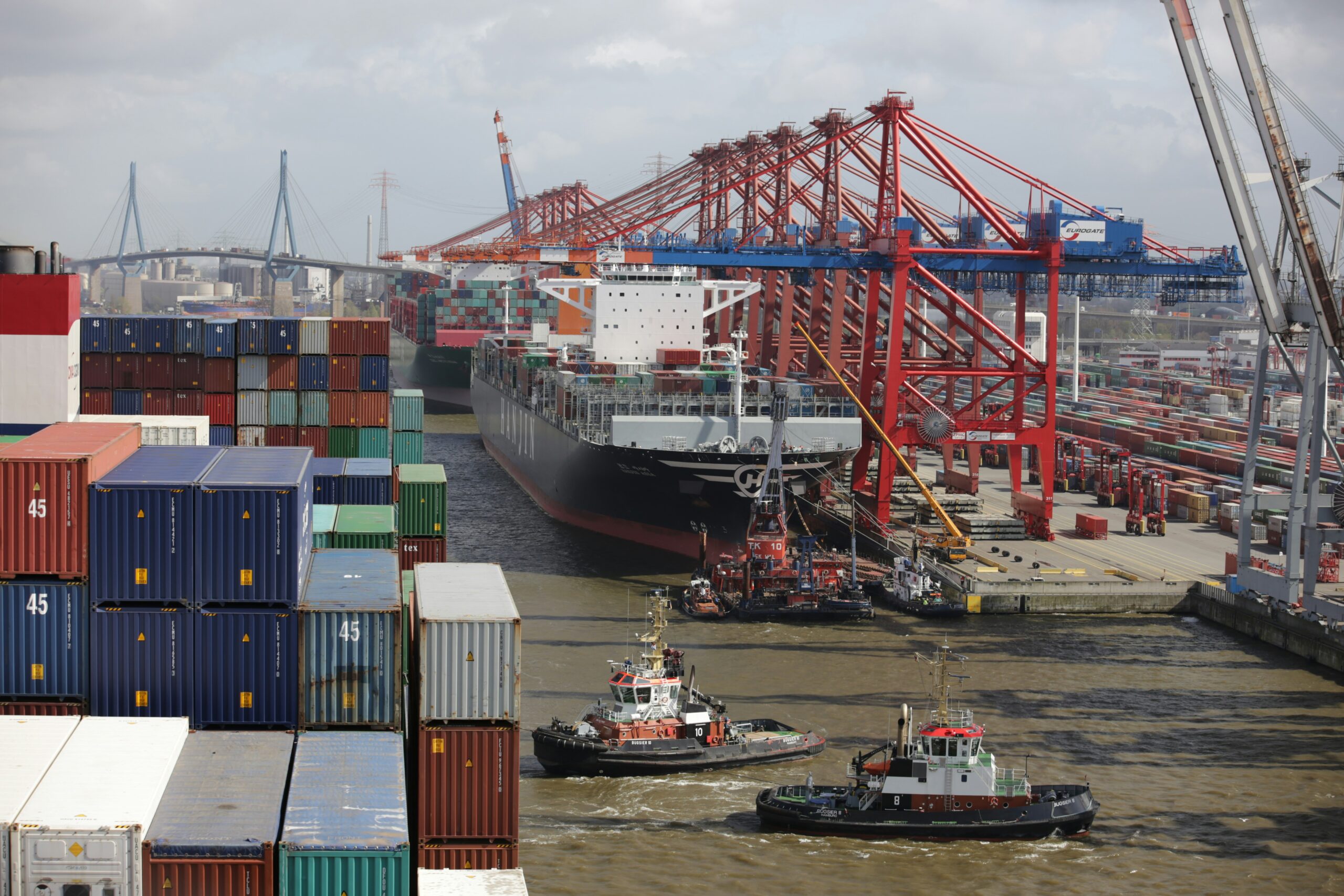
An accident during cargo handling, vessel access, or terminal operations can leave an injured maritime worker facing medical expenses, lost wages, and uncertainty about legal rights.
For workers at the Ports of Long Beach and Los Angeles, determining which laws apply is an important first step. The worker’s duties, employment relationship, location of injury, and cause of the accident may all affect available remedies.
The Longshore and Harbor Workers’ Compensation Act (LHWCA) provides federal compensation benefits for covered maritime workers. In certain circumstances, an injured worker may also pursue a separate negligence claim against a vessel or another legally responsible third party.
Understanding the difference is important when considering whether to consult a longshore accident lawyer in Long Beach or a maritime injury lawyer in Los Angeles.
Who Is Covered Under the Longshore and Harbor Workers’ Compensation Act?
Not every person working at a port is automatically covered by the LHWCA.
For many land-based maritime injuries, coverage depends on two principal requirements:
Employment status: Whether the worker performs qualifying maritime employment, such as longshore work, ship repair, shipbuilding, or shipbreaking.
Injury situs: Whether the injury occurred on navigable waters or at a qualifying adjoining location, such as a pier, wharf, dry dock, or terminal.
Certain employees may be excluded, depending on their duties and statutory conditions. These can include workers performing exclusively clerical or security functions, certain temporary suppliers or transporters, and workers performing specified recreational-vessel work.
Masters and vessel crew members are excluded from LHWCA employee coverage.
The applicable requirements are found in 33 U.S.C. §§ 902(3) and 903(a).
LHWCA Benefits Versus a Negligence Lawsuit
The LHWCA generally provides compensation to covered injured workers without requiring proof that their employer negligently caused the accident.
However, the worker must still establish coverage and entitlement to the claimed benefits.
Under 33 U.S.C. § 905(a), an employer that has secured the required compensation coverage generally receives protection from separate employee damages lawsuits, subject to statutory exceptions.
This does not necessarily prevent an injured worker from pursuing a legally supported claim against another responsible party.
Under 33 U.S.C. § 933, compensation and third-party recoveries must be coordinated, and reimbursement or credit obligations may arise.
Can an Injured Longshore Worker Sue a Vessel Owner?
In certain circumstances, yes.
33 U.S.C. § 905(b) permits a covered worker to pursue a negligence claim when vessel negligence causes injury, subject to statutory limitations.
However, an accident aboard a vessel does not automatically establish vessel liability. Section 905(b) also does not permit recovery based solely on the vessel’s unseaworthiness.
The United States Supreme Court addressed vessel responsibilities in Scindia Steam Navigation Co. v. De Los Santos, 451 U.S. 156 (1981).
Three duties are particularly important.
1. The Turnover Duty
When turning the vessel over for cargo operations, the vessel must exercise appropriate care regarding the ship and its equipment so that an experienced stevedore can perform the work with reasonable safety.
This includes a duty to warn about qualifying hidden hazards that are known, or should be known through reasonable care, to the vessel and would not be known, obvious, or anticipated by a reasonably competent stevedore.
The duty does not guarantee that every condition aboard the vessel is free from danger.
2. The Active-Control Duty
A vessel may be responsible when it actively participates in cargo operations and negligently causes injury or fails to exercise due care regarding hazards in areas or equipment remaining under its active control.
Determining who controlled the relevant equipment or work area can be essential.
3. The Limited Duty to Intervene
Under certain circumstances, a vessel may have a duty to intervene after becoming aware of a dangerous condition during cargo operations.
This is a limited duty, not a general obligation to supervise the stevedore’s work.
Questions concerning the vessel’s knowledge, the nature of the danger, and the stevedore’s continued operations may determine whether the duty arose.
These principles make the circumstances of the accident, the timing of the hazard, and control of the work area particularly important.
Does Vessel Liability Apply to Every Terminal Accident?
No.
The LHWCA’s definition of vessel can include certain owners, operators, charterers, and other vessel interests under 33 U.S.C. § 902(21).
However, an injury at a container terminal does not automatically establish negligence by a vessel merely because the cargo originated aboard a ship.
A viable claim requires an applicable legal duty and evidence connecting the vessel’s negligence to the injury.
Special Considerations for Shipyard and Vessel Repair Injuries
Workers engaged in shipbuilding, ship repair, or shipbreaking may be covered by the LHWCA, depending on their employment and the circumstances of the injury.
However, Section 905(b) imposes additional limitations on certain vessel-negligence claims where the worker’s employer is also an owner, operator, or charterer of the vessel.
The statute also contains specific exclusions concerning certain recreational-vessel work.
Accordingly, shipyard employees should not assume that the same remedies apply to every maritime injury.
What Evidence Should Be Preserved After a Longshore Accident?
An injury claim may depend on evidence showing the condition of the work area, who controlled the equipment, when a dangerous condition developed, and whether warnings were provided.
Potentially important evidence includes:
- Photographs and video of the accident location.
- Names and contact information of witnesses.
- Accident reports and contemporaneous communications.
- Vessel, equipment, container, and cargo identification.
- Inspection, maintenance, and repair records.
- Communications between vessel personnel and stevedoring employees.
- Medical records and documentation of lost work or restrictions.
Prompt preservation can help prevent relevant evidence from becoming unavailable.
Workers should seek necessary medical care and preserve only evidence they lawfully possess, without altering originals or accessing restricted areas or systems.
What Are the Deadlines for Reporting a Longshore Injury?
Reporting an accident is not necessarily the same as filing a compensation claim.
Under 33 U.S.C. § 912, notice of injury is generally required within 30 days, subject to statutory awareness provisions and exceptions.
Under 33 U.S.C. § 913, a disability or death compensation claim generally must be filed within one year, although awareness rules, compensation payments, occupational disease, and other statutory provisions may change the applicable calculation.
Certain occupational-disease claims have different filing periods.
These compensation deadlines should not be confused with deadlines applicable to separate third-party lawsuits.
Workers should have all applicable notice and filing requirements evaluated promptly.
Why Legal Advice Matters Before Settling a Third-Party Claim
A third-party settlement may affect a worker’s continuing LHWCA benefits.
Under 33 U.S.C. § 933(g), certain settlements require written approval from the employer and its compensation carrier before execution. Other notification and filing requirements may also apply.
Failure to comply with applicable requirements can result in the termination of compensation and medical benefits.
Before signing a settlement agreement or release, injured workers should consider its potential effects on compensation, medical treatment, reimbursement, and credits.
Longshore Accident and Maritime Injury Representation in Long Beach and Los Angeles
Longshore workers, terminal employees, and qualifying maritime workers injured at the Ports of Long Beach and Los Angeles may face complex questions involving federal compensation benefits and potential third-party negligence claims.
Important questions include:
- Does the LHWCA cover the worker and accident?
- Who employed the injured worker?
- Who controlled the work area or equipment?
- Was vessel negligence involved?
- What evidence should be preserved?
- Which notice, filing, and settlement requirements apply?
Jahani Law P.C. can be contacted about maritime injury representation involving the Ports of Long Beach and Los Angeles.
Learn more about our practice:
Maritime Law — Jahani Law P.C.
An injury at a port does not automatically establish vessel liability. A careful examination of the facts and applicable law is essential to determining the remedies available.
Disclaimer: This article provides general legal information and is not legal advice for any particular injury. Coverage, deadlines, liability, and available remedies depend on the facts and applicable law. Reading this article or contacting Jahani Law P.C. does not create an attorney-client relationship. Representation requires a written engagement agreement. Please do not send confidential information before a conflict check and confirmation of representation. No outcome is guaranteed.